

Sweater Weather, Flu Weather
By: Melody Rabor-Dizon
H ello again, my dear readers! The leaves are turning, pumpkin spice is back on every menu, and somewhere in your house, someone is already coughing. Yes, mga kaibigan, flu season is here once again.
Every October, I hear the same question: “Melody, do I really need all those shots?” My honest answer, with love: most likely, yes. Let me tell you why.
Think of a vaccine as a gentle introduction. It shows your immune system a photo of an unwelcome guest before he ever knocks on your door. Your body studies the face, remembers it, and gets ready. So when the real germ comes calling, your body recognizes it and kindly shows it the door. It won’t make you invincible, but it can turn a hospital stay into a few days of tea and arroz caldo at home, and often into nothing at all.
So Many Kinds, One Purpose
Some vaccines use a weakened live germ (MMR, chickenpox), others an inactive one (the flu shot) or just a tiny piece of it (shingles, pneumonia, RSV). Tetanus shots use a harmless copy of the germ’s toxin, and mRNA vaccines like COVID-19 hand your cells a little recipe card they read and then toss away.
Different recipes, same goal: protecting you from flu, COVID-19, RSV, pneumonia, shingles, whooping cough, measles, and even HPV-related cancers. A shot that helps prevent cancer! When I was a young nurse, we only dreamed of that.
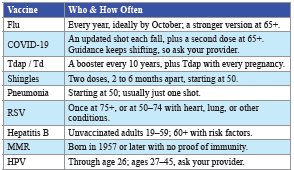
Your Grown-Up Vaccine Calendar
What to Ask For
Here is what I tell my own family and friends to request.
For the flu, if you are 65 or older, ask for a high-dose, adjuvanted, or recombinant flu vaccine. These are made to work better with an older immune system. Under 65, a standard flu shot is just fine. Try to get it by the end of October, since it takes about two weeks for your protection to build.
For shingles, ask for Shingrix. It is the shingles vaccine used in the U.S. today, and it is more than 90 percent effective. Do come back for the second dose.
For pneumonia, ask about PCV20 or PCV21. For most people who have never had a pneumonia shot, one dose is all you need.
For RSV, it is one dose, not every year. And for COVID-19, ask for this season’s updated formula.
A Little Soreness, A Lot of Protection
Expect a sore arm, and maybe a low fever or a tired, achy day. That’s just your immune system doing its homework. Shingrix, the shingles shot, can leave you feeling a bit blah for a day, so please don’t schedule it the morning of your apo’s binyag. Serious allergic reactions are very rare, but we still like you to sit with us for 15 minutes, just in case.
When to Wait
The one true “no” is a severe allergic reaction to a past dose or to an ingredient. If you’re pregnant, or your immune system is weakened by chemo, transplant medicines, or high-dose steroids, ask your provider which vaccines are safe for you. Feeling feverish or truly unwell? Simply reschedule. But a mild cold, antibiotics, or an egg allergy? Those are not reasons to skip, kaibigan. And “I never get sick”? Ay, we’ve all said that one.
What Happens Without Them
Vaccines do not promise that you will never get sick. What they do, very reliably, is lower your chances of getting seriously sick. Without them, your body has to learn on the job, in the middle of a real infection.
For many healthy adults, that means a rough week or two in bed. For seniors, for anyone living with diabetes, heart disease, or lung disease, and for newborns, it can mean pneumonia, a hospital stay, or a long, slow recovery. About one in three people will get shingles in their lifetime, and its nerve pain can last for months. Measles, which was nearly gone in this country, has returned in communities where fewer people are vaccinated.
Your shot protects you, and it also protects the people around you: the new baby at the family party and the Lola on chemo who cannot be vaccinated herself. Now, that’s love. So this season, check your vaccine record, talk with your provider or pharmacist, then slip on your favorite sweater and roll up that sleeve. Your whole family will thank you