


The Sad State of Healthcare in U.S.
By: Joe Mauricio
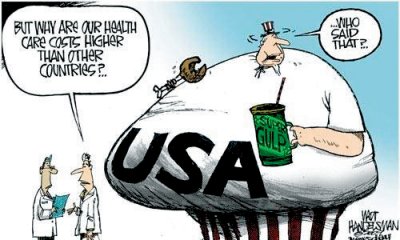 The United States is No. 1 in worldwide health care in cost per capita, but far below the list in quality care. Statistically, Americans spend more money on their health care than anything else, but food. But the consumption of health care dollars is predominantly not paid for by the consumers. The middlemen, so to speak, make the forces of free enterprise moot. The consumers are bystanders in the relationship between purchase and quality because they do not directly pay for the service or products.
This phonomenon is called monopsy. The consumer is not the buyer, but the buyer is almost simply dominant. This is the reverse of monopoly, where the seller has the last say. This is not Bill Gates’ Microsoft at work.
It is the Federal and State Medicare and Medicaid programs that buy upward of 75% of all health care service products. Under the Obama Nation, government will be the purchaser of the last resort for all Americans. Due to the onslaught of the “baby boomers,” both the government- run health care and the insurance industry will bankrupt America, unless they learn how to win the monopsy game.
After passing the Affordable Health Act of 2010, the Obama administration offered the states new ways to improve lower cost of Medicaid by improving care quality for nursing-facility residents (however, at the cost of $1trillion for demonstration projects and another $1trillion in enforcement of new regulations over the next 10 years, health care administration will double.
In 1971, Nixon administration instituted wage and price control for businesses, including hospitals, the first time hospitals had been required to relate costs to specific procedures on not just the average costs per patient per day. But there were no cost accounting system in place to track costs per diagnosis, treatment, test or outcome. As a result, the project fell on the integrity of the hospitals’ management to justify their escalating prices to the insurance companies.
Now in 2015, under the Affordable Patient Care Act, they are being asked to produce the same records to justify their escalating prices and the story is the same–no system in place to cost specific services. But now their integrity is being challenged and will result in only certain health plans putting them in their network. If they aren’t in the network and they admit a patient out of network, the patient will get stuck with sizable bill and now the hospitals have the authority to garnish their future. So the Affordable Act has created another MONSTER called bankruptcies, which was to have been prevented. It will do just the opposite– make it more complicated for the practitioner without improvement in results. That is the history of government- run hospitals, like the VA health system failure.
“Under the United States Constitution and Federal Law, nursing home residents have the right to reasonably-safe living conditions, adequate health care, restorative and rehabilitative care services, freedon from unreasonable restraints, and a treatment setting that is the most integrated and appropriate, based on individual resident’s needs. Federal statutes governing the operations of nursing homes and their implementing regulations create similar rights.”
There are many health care providers being bullied and victimized by our failing government, taking away freedoms of enterprising citizens, small businesses, patients, families, communities, employees, because of the enforcement of health service rules and regulations, not adhering to the Rules of Law and Administrative Procedure.
Filipino health care businesses, hang in there. There is a changing wind pattern (Election 2016), and possible new administration that could help ease the burden of small business enterprises, including Filipino health enterprises.