

Old Letters
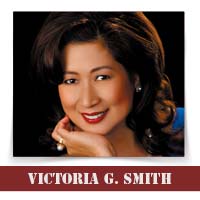
By: Victoria G. Smith
Another move, another house,
not yet a home. All around me:
the scraps and souvenirs of a life
stuffed in boxes.
How does one measure how far
we’ve gone on this journey?
Or depth of being?
Or success or failure?
First there were two hundred, then
four hundred. now eight hundred?
A thousand, perhaps? A thousand
boxes—the accumulation of years.
Projects begun but never finished,
vacation snapshots, milestones reached;
the turning at the crossroads,
where the fork stared us in the eye:
Did we choose the road less traveled—
the one that made all the difference?
Or did we, like many, pick the safer path,
rode the bandwagon of mediocrity?
is this what it all amounts to—
this counting of boxes as proof
of our lives? Are we simply
the sum of a mover’s list?
the house is full, yet emptiness
echoes through its rooms. until i see
them—the old shoeboxes. i hesitate.
intent cowers before Pandora’s curse:
What does the accused plead?
guilty! guilty! My accuser screams.
the verdict lies within.
Old letters sing to me—some old,
forgotten melody. And one by one,
they tell my story in haunting
strains of raw symphony.
My mother reaches me across
the sea in the cherished slants
and loops of my youth.
i caress the writing as if it were
her hand, as if she were here.
i remember them dearly:
her love notes of instructions
to survive life away from home.
reminders of family gatherings,
prayers for safety and blessings.
And then—those fateful ones she sent
post my exile to this foreign land.
it was no use, Mama.
there was nothing left for me there.
Half the story lies between
the lines; the other half, here.
take courage! Keep faith!
rejoice in second chances.
And from sisters, sweet sisters!
Diaries of parallel lives
of college things and first loves,
invites for weddings i never witnessed.
So far away from home, so far away.
Can’t return home now. Can’t.
i wish it were otherwise,
but life’s a pretzel, my dears.
And then—the fabric of new life
in new friends and new places,
a new loving husband, and beautiful
young children. Life goes on.
Seasons marked by greeting cards,
hallmarks of celebration and strife.
And in between, the stuff of life:
lamentations on weather and the times.
gratitude, anger, recrimination,
comic relief, momentous occasion,
plans, dreams, tedious rhythm of days,
hope and frustration, peace in resignation.
But look here,
yes, here.
Don’t you see?
there has always been,
always will be—love.
Precious boxes of life!
My accuser stands silent.
Poet’s Notes. I wrote above poem in 2005—more than a decade ago, during the thirteenth time we’d moved across North America in the then eleven years my husband and I had been married. These moves were compelled by my husband’s career, and like most immigrants, I did what was required of us to go where our livelihood dictated. Now, after two more moves (these times voluntary, as they were in conjunction with our blessed realization of our dream of living in not only one but two dream homes) and twenty-two years of marriage, we’re empty nesters—with our youngest in college and our eldest thriving on her own with her own career and independent life elsewhere. And we’re finally doing something what all parents should do in their golden years—saving our children this one tedious, potentially painful task when we’ve passed on from this life: cleaning and editing out the unnecessary stuff of our lives.
It’s amazing how much junk one accumulates through the years. If I were to give one advice to a younger wife and mother, it would be this: Do NOT buy anything unless you need it, and try to engage your whole family—especially your children— to commit to a yearly spring cleaning of each family member’s accumulated things. But like most mothers, I felt too busy and exhausted with the everyday management of our lives to make time for this major item of household management; and like most Americans, I fell into the trap of consumerism; and like most immigrants from a third world country, I was hesitant to throw anything away, thinking we were going to need something later, until that something multiplied into hundreds, even thousands of things that proved to be unneeded in all these years. Truly, possessions weigh you down in every sense of the term, and thus, my husband and I have made it the theme of these golden years of our lives to free ourselves of our possessions.
But this business of freeing ourselves of the stuff of our lives has also bore down on me the weight of the burden of the years and decades that have passed, and along with them, family and friends who are gone. For as I go through our things, I run across letters, cards, and photographs of such beloved people in my life, and I feel the acute loneliness they left behind by their seeming abandonment of me. It is indeed a time for feeling old. I have lived long enough to experience the passing of eras with the passing of beloved personalities. And as I encounter my children’s kids’ things—their toys and little dresses and sweaters, even left-over and now dried-out baby wipes, I struggle to remember them as little children. Where have those sweet years gone? They seem to have faded into the fog of rattled and harried confusion that to me sums up most of a young mother’s life as she struggled to cook, clean, shop for groceries and the kids’ needs, drive them to and from school, drive them to extracurricular activities such art and sports lessons, orchestra rehearsals, performances, and dance recitals, and the all important ingredient of their young social lives—play dates and friends’ birthday parties. Now that I am finally ready to enjoy maximum quality time with my children, they aren’t around anymore. It is indeed a brave thing to be—being a parent. It seems to be an unending journey into the brink of loss of that which we love. How does one hang onto what’s beloved to us and what’s important in order not to lose them?
These reflections prompted me to return and re-read above poem I wrote during the unpacking of our moving boxes in the great move of ’05 as I encountered letters and cards from my mother and siblings from the Philippines—which made me keenly homesick. The poem now strikes me as a message to me from the younger me. Ironically, the younger version of me appears wiser, as she gives me the answer to my question of how we hang onto the people and memories we love. She tells me that love truly never disappears— that it merely evolves, its energy remaining with us long after its mortal manifestation is gone.
Thus as I continue to face this gargantuan task of going through our accumulated things, I choose to see it all no longer as a burden, but a blessing—the blessing of having so much love to remember. This February, the month especially dedicated to celebrating romantic love, let us take time to celebrate the other kinds of love in our lives. And may they be plentiful for you all, too!
(All rights reserved. Copyright © 2017 by Victoria G. Smith. For updates on her author events & publications, go to VictoriaGSmith.com. “Like” her on Facebook at Author Victoria G. Smith. “Follow” her on Twitter @AuthorVGSmith)