

Latest On IMMIGRATION TOPICS
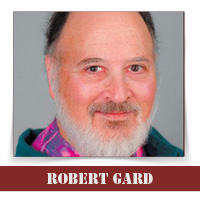
By: Robert Gard
 On a Personal Note… Please note that my contact information has changed as of November 1, 2011, and I am now employed by the law firm of Immigration Attorneys, LLP at 203 North LaSalle Street, Suite# 1550, Chicago, IL 60601, and my new email address is rgard@immattyllp.com; telephone# (312) 661-9100. PLEASE NOTE: email is the (my) preferred method of contact.
article on the Process of Granting TPS to Nationals of the Philippines — Philippine Government formally Requests Grant of and Designation for Temporary Protected Status (“TPS”) Philippine Foreign Affairs Secretary Albert F. del Rosario has formally requested the United States Government on December 13th, to designate the country under Temporary Protected Status (TPS). A more formal written request was filed on December 16th. TPS will allow eligible Filipinos to stay and work in the US in order for them to assist in the country’s continuing recovery efforts after Super Typhoon Yolanda (Haiyan) devastated parts of the Philippines. The US government may take some time to evaluate the request. Even if the US government approves the TPS request, an applicant will need to prove that they have suffered hardship as a result of the Super Typhoon. If the applicant proves hardship he is allowed to stay in the US and granted work authorization. The TPS for Haitian nationals is illustrative. Haiti suffered a massive earthquake in January 2010. The US granted TPS for Haitian nationals who could prove that they have suffered an economic hardship as a result of the earthquake, and that initial TPS grant has been renewed/extended. The ability of overseas Filipino workers, who contribute $26 billion to the Philippine economy, to stay employed is critical, said Linda Oalican of Damayan Migrant Workers Association at a press conference Dec. 19 at the City Hall steps in Lower Manhattan. “The economic burden to workers has been greatly increased by the devastation of Yolanda,” she added. The TPS designation would allow eligible Filipino nationals to remain in this country while the Philippines recovers from the recent devastation of the typhoon. TPS designation could provide relief to an estimated 500,000 to 1 million undocumented Filipinos. An employment authorization documented granted under TPS remains valid for 18 months and may be extended. The statute governing TPS is found at 8 USC Section 1254 (a), and the general requirements for TPS at subsection (c) of that statute are as follows: (c) Aliens eligible for temporary protected status (1) In general (A) Nationals of designated foreign states Subject to paragraph (3), an alien, who is a national of a state designated under subsection (b)(1) of this section (or in the case of an alien having no nationality, is a person who last habitually resided in such designated state), meets the requirements of this paragraph only if— (i) the alien has been continuously physically present in the United States since the effective date of the most recent designation of that state; (ii) the alien has continuously resided in the United States since such date as the Attorney General may designate; (iii) the alien is admissible as an immigrant, except as otherwise provided under paragraph (2)(A), and is not ineligible for temporary protected status under paragraph (2)(B); and (iv) to the extent and in a manner which the Attorney General establishes, the alien registers for the temporary protected status under this section during a registration period of not less than 180 days. Some Immigration Highlights (and Lowlights) from 2013, and a Few Expectations for 2014 2013 was a year of high hopes, as well as dashed hopes for Comprehensive Immigration Reform (“CIR”). By the end of April of 2013, the Senate had produced a truly bipartisan CIR bill, designated as “S. 744.” The Senate passed their S. 744 CIR bill on June 27th by a vote of 68 to 32, and passed the bill on to the House for consideration, where Speaker Boehner declared the Senate bill dead on arrival, and refused to bring the Senate bill to a vote in the House, even though most accounts indicated that there were enough Democratic and Republican votes to pass the Senate bill had Speaker of the House Boehner had the political courage and will to allow a vote on the measure. The Senate bill was not perfect, and it continued the questionable practice of throwing obscene amounts of taxpayer dollars at border fences and hi-tech gadgetry to garner additional Republican support, but it also provided for a pathway to citizenship for undocumented immigrants, the strongest version yet of “the DREAM Act”, a new temporary visa to meet the changing needs of the labor market, and a variety of provisions designed to reduce the current immigrant visa backlogs. Toward the end of 2013, Speaker Boehner hired a wellrespected consultant on immigration reform, re-igniting hopes that he was about to re-engage on the issue. The Speaker’s retaining the services of Rebecca Tallent, most recently Director of Immigration Policy at the Bipartisan Policy Center (and former immigration issues advisor to Senator John McCain) provides an encouraging sign that the Speaker of the House will seriously and substantially address the issue of CIR when the House membership returns to Washington in 2014. Make no mistake, there are huge hurdles to be overcome in the House, and the House Committee charged with responsibility on immigration legislation is headed by Rep. Bob Goodlatte (R. VA), no friend of immigration reform, and an avowed opponent of a path to citizenship for undocumented immigrants. In the Senate, Senator Ted Cruz has vowed to work with any anti-immigration reform House members to do whatever may be necessary to stymie CIR for political reasons. 2013 also saw the Supreme Court issue decisions that significantly struck down the Defense of Marriage Act (DOMA) and upheld the Federal Court Rulings that ruled California’s Proposition 8 unconstitutional, allowing same sex couples to marry (where legal by State law) and secure the same federal benefits (including immigration benefits) as heterosexual couples. Impressively, both the USCIS, and the U.S. Department of State were prepared for these Court decisions, and immediately implemented remedies, issuing approvals of green cards for foreign same sex spouses (married to U.S. citizens or otherwise known as “bi-national couples”) within days of the Supreme Court Ruling. While the program for granting Deferred Action for Childhood Arrivals (DACA) was announced in 2012, regulations and guidelines for implementation were not in place until 2013. Now, over a year into the program, more than 455,455 applicants have been approved, and those young immigrants are now considered lawfully present. The program has been incredibly successful – allowing “the DACA-mented” to go to school, get jobs, and obtain their driver’s licenses in most states. However, not all of those eligible have applied, citing reasons such as the filing fees, mistrust of the program, the hope that something better awaits through immigration reform, or the lack of outreach and education about DACA in their home state. Next year, as the first recipients begin to renew their DACA status, and as USCIS puts into place a similar policy directed at the family members of military personnel, it will become more and more clear that, while administrative action is a good thing for a lot of people, it is not a permanent fix, and that broader legislative reform is still needed. 2013 was a great year for the organizing and energizing of the constituency and coalitions supporting CIR, building, growing, and sustaining the enthusiasm and momentum necessary to move these remedial issues forward in 2014.
COPYRIGHT BY AUTHOR — 2014 This article is designed to provide accurate and authoritative information in regard to the subject matter covered. It is published and distributed with the understanding that the publisher is not engaged in rendering legal, accounting or other professional service. It is submitted for publication by the author with the understanding that each individual case is different, and this article is not a formal legal opinion and should not be relied upon as advice by the author in a particular legal situation. Mr. Gard has been engaged in the practice of immigration law since 1977. He is a frequent writer and lecturer in the American Immigration Lawyers Association and has served that professional organization as a Chapter Chair of the Greater Chicago Chapter, and as a Director. Written questions may be submitted to Mr. Gard. At his discretion, selected questions or issues may be addressed in subsequent articles. Mr. Gard is available for appointments for consultation in immigration law-related matters at the law offices of Immigration Attorneys, LLP, 203 North LaSalle Street, Suite# 1550, Chicago, Illinois 60601, Contact Information (email is the preferred method of contact): e-mail: rgard@immattyllp.com Telephone: (312) 661-9100 ext. 8943; FAX: (312) 661-9021; Our firm has several multilingual lawyers engaged in the practice of immigration law, and also has lawyers available for criminal and civil litigation and health care facility/medical practice and licensing issues. The firm also has offices in Milwaukee (WI), Tampa (FL), and Phoenix (AZ).