Happy International Women’s Day on March 8th, a great history for women who needed a day to celebrate women and their fights for their rights.

By: Veronica Leighton
Speaking of women in leadership positions, there will be thousands, even millions of them to make mention in this story. As we’re talking internationally, let’s start from:
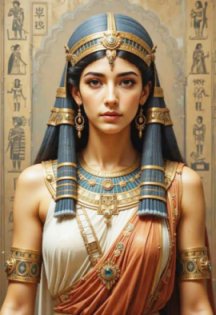
1. Cleopatra, the Queen of Egypt (69 BC – 30 BC) Cleopatra ascended the throne at the age of 17 and died at the age of 39. She spoke 9 languages. She knew the language of Ancient Egypt and had learned to read hieroglyphics, a unique case in her dynasty. Apart from this, she knew Greek and the languages of the Parthians, Hebrews, Medes, Troglodytes, Syrians, Ethiopians, and Arabs.
With this knowledge, any book in the world was open to her. In addition to languages, she studied geography, history, astronomy, international diplomacy, mathematics, alchemy, medicine, zoology, economics, and other disciplines. She tried to access all the knowledge of her time.
Cleopatra spent a lot of time in a kind of ancient laboratory. She wrote some works related to herbs and cosmetics. Unfortunately, all her books were destroyed in the fire of the great Library of Alexandria in 391 AD. C. The famous physicist Galen studied her work, and was able to transcribe some of the recipes devised by Cleopatra. One of these remedies, which Galen also recommended to her patients, was a special cream that could help bald men regain their hair. Cleopatra’s books also included beauty tips, but none of them have come down to us. The queen of Egypt was also interested in herbal healing, and thanks to her knowledge of languages, she had access to numerous papyri that are lost today. Her influence on the sciences and medicine was well known in the early centuries of Christianity. She, without a doubt, is a unique figure in the history of humanity. (FB)
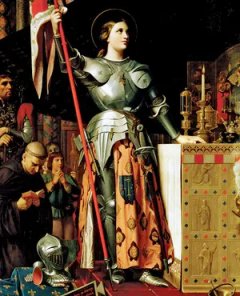
2. St. Joan of Arc (born c. 1412, Domrémy, Bar, France—died May 30, 1431, Rouen; canonized May 16, 1920; feast day May 30; French national holiday, second Sunday in May) was a national heroine of France, a peasant girl who, believing that she was acting under divine guidance, led the French army in a momentous victory at Orléans that repulsed an English attempt to conquer France during the Hundred Years’ War. Captured a year afterward, Joan was burned to death by the English and their French collaborators as a heretic. She became the greatest national heroine of her compatriots, and her achievement was a decisive factor in the later awakening of French national consciousness. (Britannica)
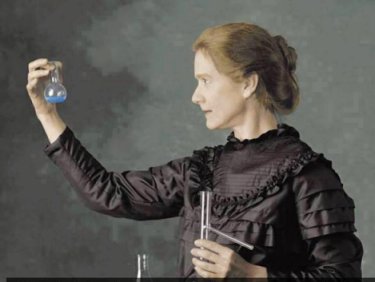
3. Marie Curie (born November 7, 1867, Warsaw, Congress Kingdom of Poland, Russian Empire—died July 4, 1934, near Sallanches, France) was a Polish-born French physicist, famous for her work on radioactivity and twice a winner of the Nobel Prize. With Henri Becquerel and her husband, Pierre Curie, she was awarded the 1903 Nobel Prize for Physics. She was the sole winner of the 1911 Nobel Prize for Chemistry. She was the first woman to win a Nobel Prize, and she is the only woman to win the award in two different fields. From childhood she was remarkable for her prodigious memory, and at the age of 16 she won a gold medal on completion of her secondary education at the Russian lycée.
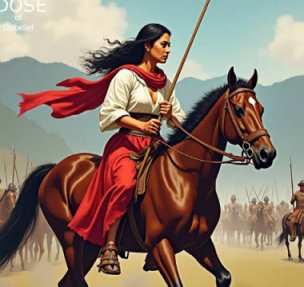
4. Gabriela Silang -She was the first Filipina to lead a revolution against Spanish colonizers in 1763, continuing the fight for independence after the assassination of her husband, Diego Silang.
As a fearless warrior, she commanded troops in Ilocos, rallying Filipino revolutionaries to resist Spanish rule. Known as the “Joan of Arc of Ilocandia,” she became a symbol of courage and defiance. Despite her eventual capture and execution, her legacy as a Filipina freedom fighter continues to inspire generations.
5. Rosa Parks – Rosa Louise Parks was nationally recognized as the “mother of the modern day civil rights movement” in America. Her refusal to surrender her seat to a white male passenger on a Montgomery, Alabama bus, December 1, 1955, triggered a wave of protest December 5, 1955 that reverberated throughout the United States. Her quiet courageous act changed America, its view of black people and redirected the course of history. As a role model for youth she was stimulated by their enthusiasm to learn as much about her life as possible. A modest person, she always encourages them to research the lives of other contributors to world peace. The Institute and The Rosa Parks Legacy are her legacies to people of good will. Mrs. Parks received more than forty-three honorary doctorate degrees, including one from SOKA UNIVERSITY, Tokyo Japan, hundreds of plaques, certificates, citations, awards and keys to many cities.
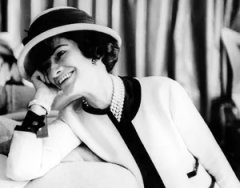
6. COCO CHANEL – Chanel enjoyed an active social life and had affairs with various wealthy men, notably Arthur (“Boy”) Capel, with whom she had a relationship until his death in 1919. With his financial assistance, she opened Chanel Modes, a tiny millinery shop in Paris, in 1910. Two years later she established a boutique in Deauville, France. There she later sold simple sportswear, such as jersey sweaters. At the time jersey was an inexpensive fabric commonly used in men’s undergarments. However, Chanel transformed the fluid material into practical but elegant designs, many of which were inspired by menswear. Within five years her original use of jersey to create a “poor girl” look had attracted the attention of influential wealthy women seeking relief from the prevalent corseted styles. Faithful to her maxim that “luxury must be comfortable, otherwise it is not luxury,” Chanel’s designs stressed simplicity and comfort, and they revolutionized the fashion industry.
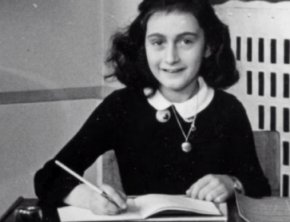
7. Anne Frank – Anne Frank became a world-famous diarist and World War II Holocaust victim after the 1947 publication of The Diary of a Young Girl, commonly known as The Diary of Anne Frank. Fleeing Nazi persecution of Jews, the German-born girl and her family moved to Amsterdam when Anne was 4 years old. They went into hiding for two years beginning in July 1942. During this time, Frank wrote about her experiences and wishes. The family was found through an anonymous tip and sent to concentration camps in August 1944. Six or seven months later, 15-year-old Anne died from typhus at Bergen-Belsen concentration camp in Germany. The families spent two years in hiding, never once stepping outside the dark, damp, sequestered portion of the building. Anne spent considerable time writing in a red-checkered diary her parents had given her on her 13th birthday, less than a month before they went into hiding.
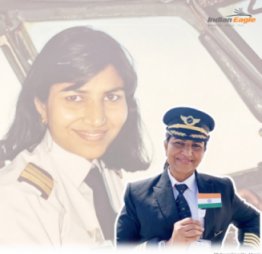
8. Nivedita Bhasin – An Indian, she was the world’s youngest female pilot to command a commercial jet. At just 26, Nivedita Bhasin took the controls of a Boeing 737 and made history. In a world where cockpits belonged to men, she didn’t ask for a seat, she claimed it. Because when you dream of flying, you don’t wait for permission. You soar.
As a child, she watched planes carve paths through the sky, dreaming of the day she would fly one. Whenever she looked up, she saw her future. But back then, women pilots were almost unheard of. She had no role models. No footsteps to follow. Still, she asked herself, “Why not take a chance?” At 16, she took her first step. She joined the Delhi Gliding Club and learned to land an engineless plane.
Each flight fueled her passion and pushed her further. Later, while training at a flying school in Patna, she faced constant reminders that aviation was a man’s world. But she kept proving she belonged in the sky. By 20, she was flying for Indian Airlines (now Air India). Her dream was no longer just a dream, it was real. In 1985, she co-piloted the world’s first all-women crew flight.
And in 1990, at just 26, she became the youngest woman to command a commercial jet. Having flown for more than 22,000 hours, Nivedita led several all-women flights and became India’s first female check-pilot. To mark International Women’s Day, she commanded an Airbus A300 on the Delhi–Kathmandu route. In 2011, she flew into war-torn Libya to rescue stranded Indians. In 2012, she piloted the Dreamliner 787 from the US to India. After serving Air India for over 37 years, she retired in 2021 as Executive Director & Chief of Flight Safety. Today, she serves as an International Director at a global organization for women pilots, shaping the future of aviation. From a time when India had only a few women pilots to currently having the highest percentage of the world’s female pilot population, Nivedita Bhasin’s story extends beyond breaking barriers.
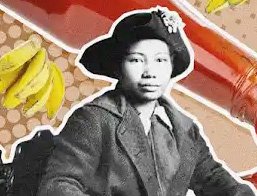
9. Maria Orosa – Freedom Fighter: Scientist and Inventor from the Philippines This delightful children’s book follows the life of Maria Orosa —a pioneering woman scientist who studied food science in the United States then returned to a war-torn Philippines and created super-nutritious foods to help her nation in a time of crisis. A champion of native products from her homeland, Orosa is celebrated for her daring war exploits as well as her scientific inventions.
10. Fe del Mundo was the first woman to study at Harvard Medical School. She opened the first children’s pediatric hospital in the Philippines, was first woman of Philippine Medical Association, & was the first woman to be named National Scientist of the Philippines #FeDelMund
Dr. DEL MUNDO concern for children led her to conceptualize a diet which consists of banana, rice, apple, tea (BRAT) for treatment of diarrhea. Adopted worldwide, this diet has saved many children from dehydration resulting from diarrhea. She invented an incubator made of bamboo
Made of different sizes, the baskets were “placed one inside the other.” She would then put hot water bottles all around and between the baskets to regulate the body temperature of babies. “I put a little hood over it and attached oxygen for the baby,” she said.